
The EU-India Free Trade Agreement (FTA), concluded on 26-27 January 2026 after nearly two decades of negotiations, marks a major breakthrough for Indian exporters. The deal yet to not in force due to legal scrubbing, ratification, and entry into force.
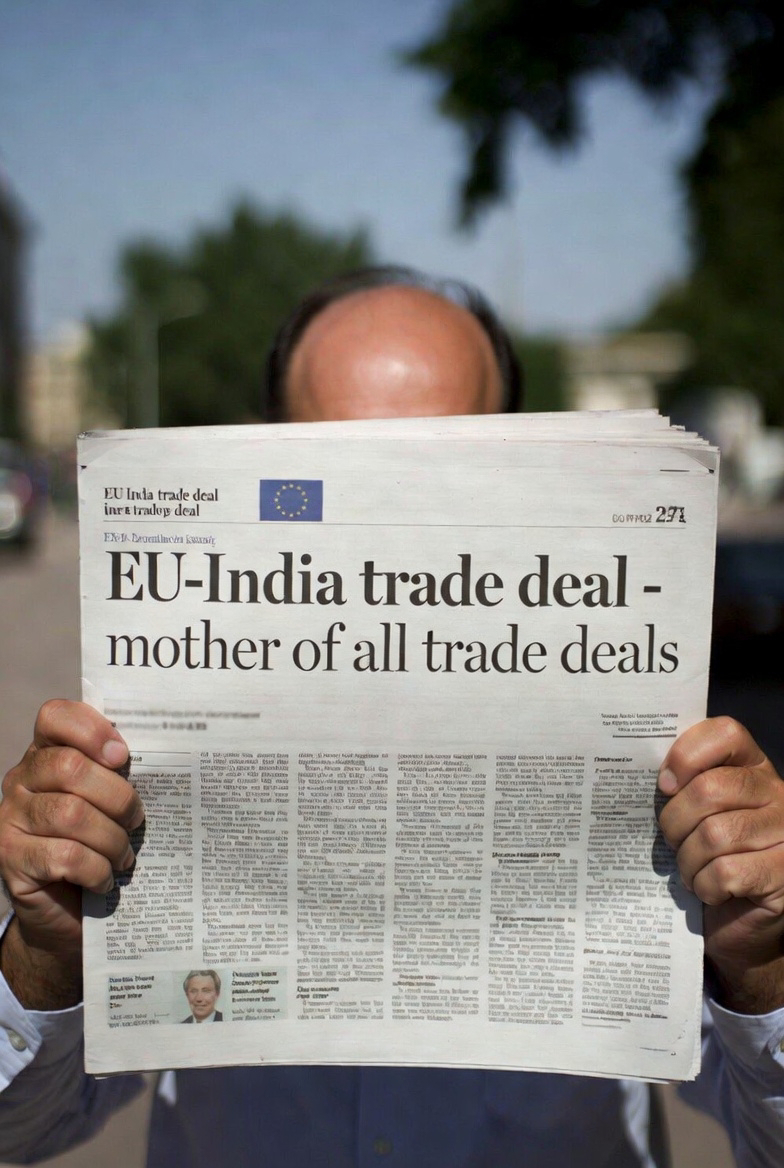
BY late 2026 or early 2027 to be implemented, it will deliver unprecedented tariff-free / low-tariff access to the EU market for over 99% of Indian exports by trade value...
Major tariff benefits of the EU-India trade deal.
The EU will eliminate tariffs on 90-91% of Indian goods immediately which are having 90.7% of current export value.
With the rest phased over 3-7 years or subject to tariff-rate quotas (TRQs). This covers 99.5% of India's export value to the EU.
Key reductions include:
Immediate zero duty(from current 4-26%)
Currently the below goods varies with 4 to 26 % tariffs but go with immediate zero duties.
Textiles & apparel, leather & footwear , gems & jewellery, marine products/shrimp, chemicals , plastics/rubber, sports goods, toys, tea/coffee/spices, certain engineering goods.
Phased zero duty:
Planned from 3 to 5 years, Additional marine/processed food items.
Partial reductions/TRQs: Remaining 6% tariffs for Steel, certain shrimps, poultry, preserved vegetables.
These changes target labour-intensive sectors that currently account for INR 2.87 lakh crore (~USD 33 billion) in exports to the EU and employ millions.
Sector-Specific Impacts on Indian Export Businesses
Textiles, Apparel, Leather & Footwear —
Zero-duty access to the EU's massive market where textiles face a USD 263 billion import market. This levels the playing field against competitors like Vietnam/Bangladesh and is expected to drive volume growth, higher margins, and MSME scaling. Current EU exports from India in these areas: USD 7-10 billion combined.
Marine Products & Seafood — Full coverage with major tariff cuts; boosts shrimp/frozen fish exports, currently USD 1 billion to EU in a USD 53 billion EU import market. Strong gains for coastal exporters like Andhra Pradesh, Gujarat, Kerala.
Gems & Jewellery — Zero duty across the board; enhances competitiveness for MSME artisans, current exports USD 2.7 billion.
Chemicals, Plastics/Rubber, Engineering Goods — Significant duty elimination/reduction; supports integration into EU supply chains and value-added exports
Agri & Processed Foods — Better access for tea, coffee, spices, grapes, gherkins, etc.; safeguards remain for sensitive items dairy, rice, etc.
Services & Others — Broader commitments in 144 sub-sectors, IT/ITeS, professional services, education, easier mobility for professionals. gains in medical devices/instruments.
Over evaluation of the deal is projected to significantly increase Indian goods exports to the EU, current bilateral goods trade USD 136 billion with India exporting USD 76 billion. It also provides a diversification lifeline in the times other countries US tariff barriers.(Current scenario of US).
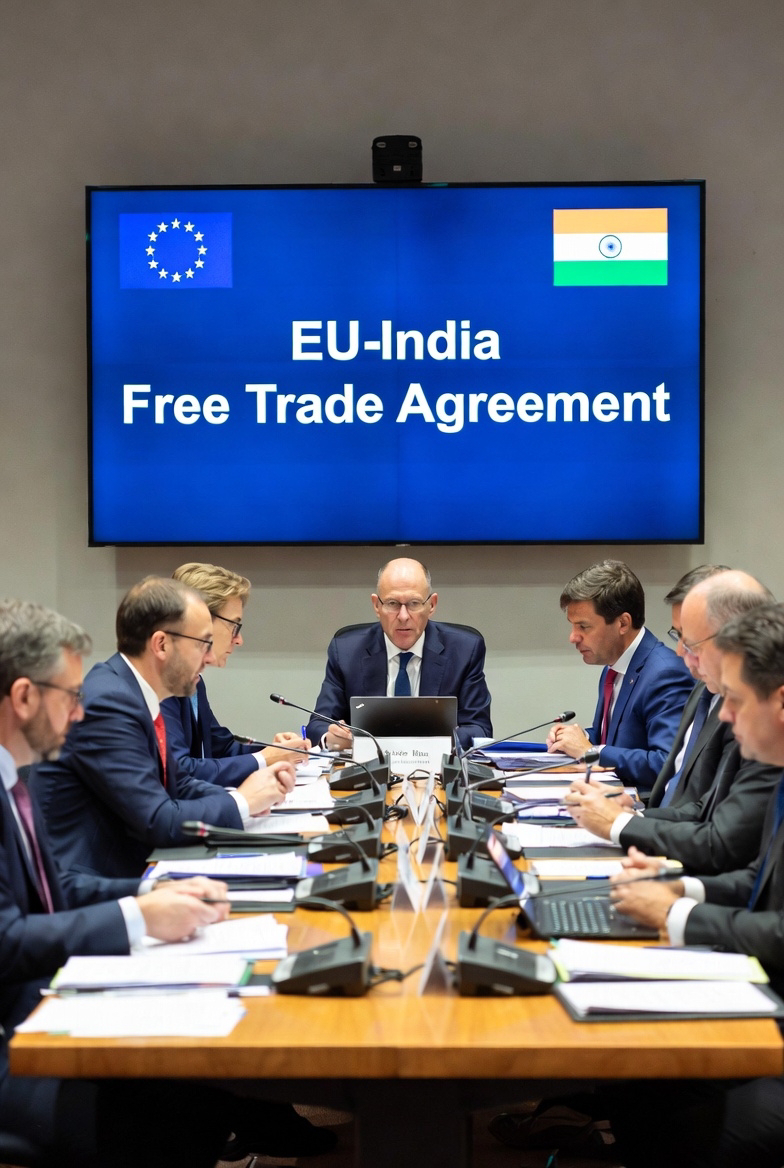
Potential challenges
Compliance requirements — Exporters must meet strict EU rules of origin, sustainability standards, sanitary/phytosanitary, and technical barriers to trade - TBTs. Non-compliance could limit benefits.
Carbon Border Adjustment Mechanism (CBAM) — No full exemption; applies to carbon-intensive exports like steel, aluminium, cement, etc., 0.2% of India's GDP but concentrated impact. Possible 10% export decline in affected engineering/steel segments without decarbonisation. India secured flexibilities and cooperation on carbon pricing/verification, plus EU support for green tech.
Phased Rollout & Ratification Risks — Full benefits depend on timely implementation; some sectors face gradual access.
Broader Positive Effects
Job Creation & MSMEs — Labour-intensive sectors stand to gain most, supporting millions of jobs and rural/coastal livelihoods.
Competitiveness & Supply Chains — Lower costs, self-certification of origin, reduced non-tariff barriers Sanitqry and phyto sanitary /TBT cooperation, and sustainability support like €500 million EU package for green transition.
Strategic Diversification — Offsets reliance on the US/China; positions India in EU value chains amid global tensions.
Conclusion
In a summary, the FTA is a game-changer for Indian export businesses—especially in labour-intensive and value-added manufacturing—offering Cost advantages,market expansion, and resilience.
Businesses should prepare now for rules of origin, sustainability reporting, and EU standards to maximise gains once the deal takes effect.